Mixing Tube / Abrasive Nozzle (Sand Tube / Focusing Tube)
Product Name: Mixing Tube / Abrasive Nozzle (Sand Tube / Focusing Tube)
Description:
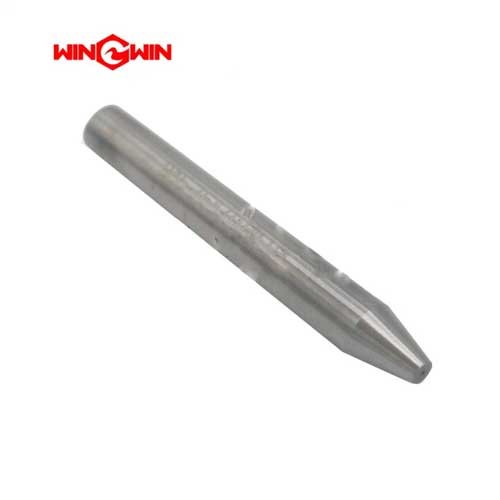
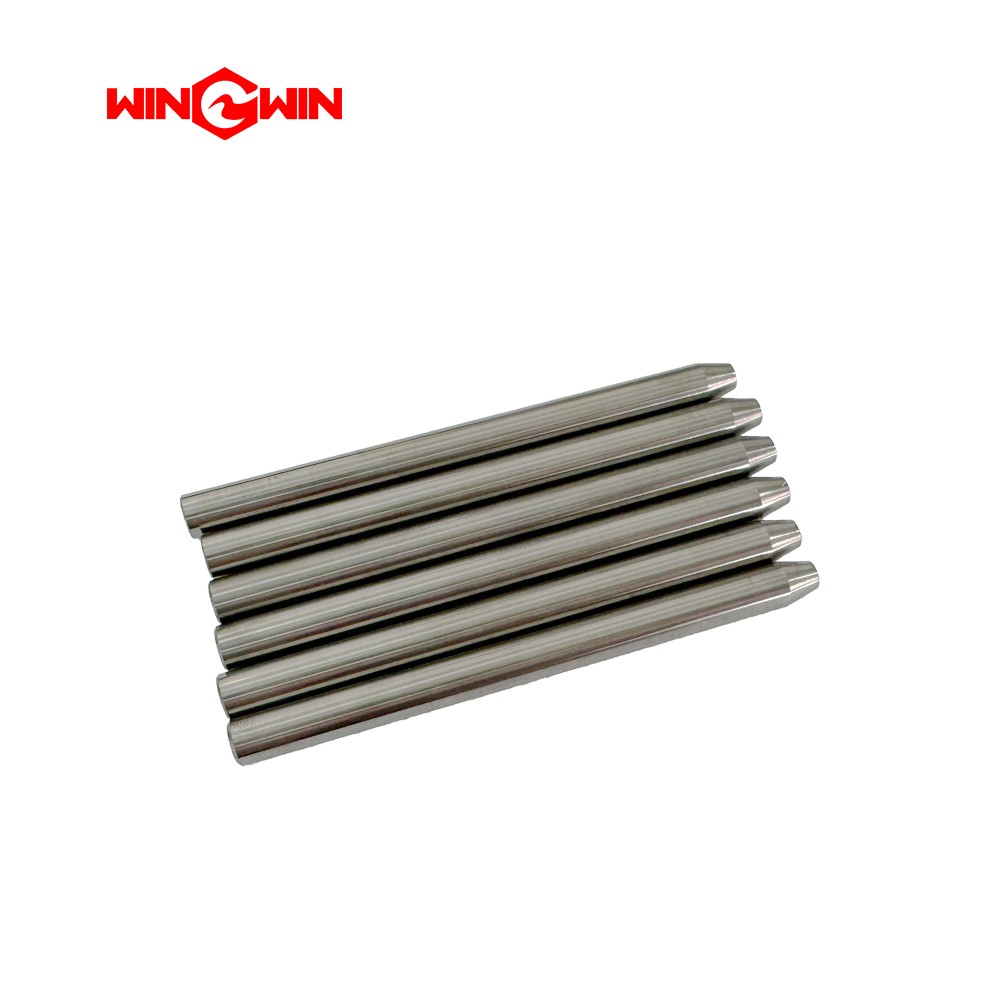
The mixing tube, commonly referred to as the sand tube or focusing tube, is a core consumable component of an abrasive waterjet cutting head . It is the final exit point in the cutting head assembly where the ultra-high-pressure water and abrasive particles (such as garnet) are mixed and focused into a coherent, high-velocity cutting stream . The tube is cylindrical and typically features a tapered inlet, a precision cylindrical bore, and a straight outlet .
This component is manufactured from extremely wear-resistant materials, typically tungsten carbide or a composite tungsten carbide alloy, to withstand the highly erosive environment of the high-speed abrasive slurry . Its inner diameter is a critical parameter, typically ranging from 0.76 mm to 1.2 mm .
Applications:
Used exclusively in abrasive waterjet cutting systems for cutting hard materials such as metal, stone, glass, ceramics, and composites .
Mounted directly below the mixing chamber and the jewel orifice (water nozzle) in the cutting head assembly .
Serves as the precision nozzle that directs the focused abrasive jet onto the workpiece .
Features:
Extreme Wear Resistance: Constructed from high-grade cemented tungsten carbide (WC) with very low cobalt content (≤6%) to maximize hardness (up to >2860 HV) and resistance to sliding abrasion .
Precision Geometry: Features a precision-honed internal bore (standard diameters: 0.76, 0.8, 1.02, 1.2 mm) that is perfectly concentric to ensure a straight, accurate cutting stream .
Dimensional Standards: Industry-standard outer diameters (e.g., 6.35 mm) ensure compatibility with most major waterjet cutting heads .
Critical Consumable: It is a high-wear part designed for regular replacement. Its lifespan directly affects cutting efficiency and operational costs .
Maintenance:
Regular Inspection: Check the exit orifice for signs of ovality, flaring, or visible bore enlargement. A worn tube will result in a wider kerf, rougher edge finish, and slower cutting speed .
Replacement Indicators: Replace the mixing tube when the cutting quality degrades or when the jet stream becomes visibly scattered. A common rule of thumb is to replace it if the cutting pressure drops by 10% from its initial state or if the jet coherence is lost .
Operational Lifespan: The service life is highly variable depending on operating pressure, abrasive type, and water quality. At 60,000 PSI (4,137 bar), the typical lifespan is 100-150 hours .
Optimization Rule (1:3 Ratio): For optimal cutting performance and to minimize wear on the mixing tube, the inner diameter of the mixing tube should be approximately three times the diameter of the jewel orifice (e.g., 0.010" orifice / 0.030" tube) .
Handling: When replacing, handle the carbide tube with care as it is hard but brittle. Do not over-tighten the retaining nut as this can crack the tube .
Storage: Store spare mixing tubes in a clean, dry environment in protective packaging to prevent pre-service damage to the delicate inner bore .