20463632-Heat-Exchanger-for-waterjet-intensifier-pump
Product Name: Heat Exchanger for Waterjet Intensifier Pump (Part No. 20463632)
Description:
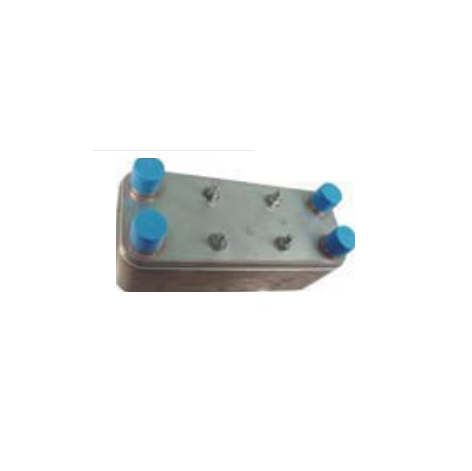
The Heat Exchanger 20463632 is a critical cooling component for the hydraulic system of a waterjet intensifier pump. Typically a plate-and-frame or shell-and-tube design, this device transfers heat from the hot hydraulic oil to a separate cooling water circuit . By maintaining the hydraulic fluid within the optimal temperature range (usually below 50-60°C / 120-140°F), it ensures proper oil viscosity, protects pump seals and components from thermal degradation, and maintains stable cutting pressure .
The heat exchanger is a key part of the cooling circuit, working with a water modulating valve to regulate flow and temperature. It is rated for systems operating at 60,000 PSI (approximately 4,137 bar) and higher.
Applications:
Cooling hydraulic oil returning from the intensifier pump to prevent overheating.
Stabilizing oil viscosity for consistent intensifier cycling and pressure output.
Protecting dynamic seals and internal pump components from high-temperature damage .
Used in water-cooled intensifier systems for continuous, high-duty cycle cutting.
Maintenance & Troubleshooting:
Failure Diagnosis (Common Issues):
Overheating (High Oil Temperature Alarm): The most common symptom. This often indicates restricted cooling water flow, a clogged heat exchanger, or a failed water modulating valve .
Milky Hydraulic Oil (Water Contamination): If the hydraulic oil appears milky or has a strange odor, the heat exchanger has likely developed an internal leak, allowing water into the oil circuit .
Rising Oil Level: A sudden, continual rise in the hydraulic oil level without adding oil is a sign of catastrophic heat exchanger failure, where water is actively flooding the hydraulic tank .
Externally Hot Fins: On an air-cooled variant, if the fins are clogged with dirt or dust, the unit will not dissipate heat efficiently .
Inspection and Maintenance Procedures:
Check Cooling Water Supply: Before looking at the exchanger, verify the cooling water supply is turned on and the pressure is adequate. The water modulating valve requires a minimum differential pressure (approx. 2.75 bar / 40 psi) to flow .
Test for Internal Leaks: To check if the exchanger is leaking water into the oil:
Full Depressurization (Critical): Shut down the system, disconnect power, and bleed all pressure. Lockout/tagout the electrical disconnect .
Disconnect water and oil lines from the exchanger. Plug the oil ports.
Apply regulated, low-pressure air (max 10 bar / 150 psig) to one water port while submerging the exchanger or listening for bubbles in the oil ports .
If bubbles appear, the exchanger is defective and must be replaced.
Clean the Unit (Water-Cooled): If flow is good but performance is poor, the water-side passages may be scaled. Flush the exchanger with a descaling solution approved for stainless steel/copper to remove mineral deposits.
Clean the Unit (Air-Cooled): If air-cooled, use compressed air to blow dust and debris out of the cooling fins from the inside out .
Water Quality: Poor cooling water quality (hard water, debris) directly shortens the life and efficiency of the heat exchanger. Filtration and water treatment are essential.
Replacement: Heat exchangers are typically sealed units. If the unit is clogged beyond cleaning or has an internal water-to-oil leak, it is generally recommended to replace the entire assembly. Repairing leaks is usually not feasible .