VR080101320-HP-tube-38-for-BHDT-waterjet
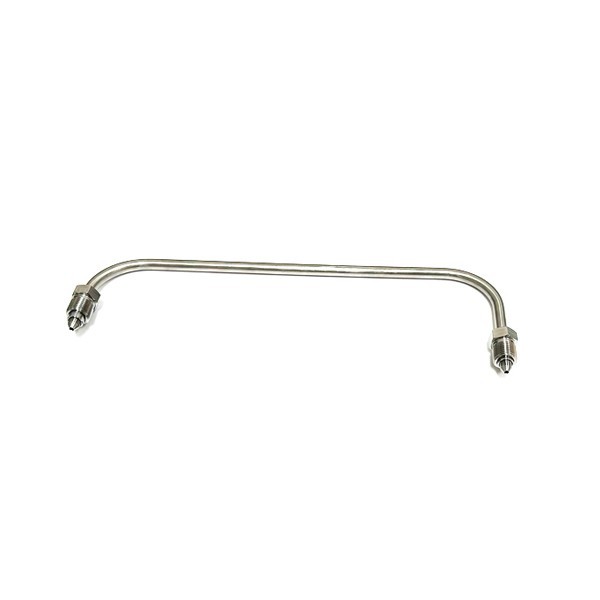
Product Name: High-Pressure Tubing (3/8″ for BHDT) – Part No. VR080101320
Description:
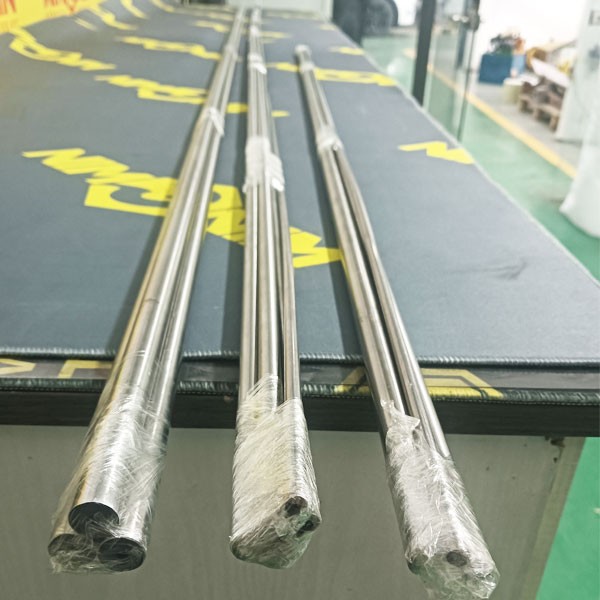
This component is a length of precision seamless high-pressure (HP) stainless steel tubing, specifically 3/8 inch outer diameter, designed for BHDT waterjet cutting systems and other ultra-high pressure (UHP) applications. Manufactured from cold-worked, corrosion-resistant stainless steel, it is engineered to safely transport pressurized water (or other fluids) from the intensifier pump to the cutting head assembly.
The designation “3/8” refers to the standard nominal outer diameter for medium-to-high flow waterjet plumbing. This tubing is designed to withstand the extreme cyclic stresses inherent in waterjet operation, typically up to 60,000–90,000 PSI (approximately 4,137–6,480 bar). Its seamless construction ensures uniform wall thickness, which is critical for reliable pressure containment, and the ends are typically prepared (cut square, deburred, and coned) to accept standard high-pressure fittings.
Applications:
Serves as the rigid or semi-rigid conduit for high-pressure water between the intensifier pump, manifolds, on/off valves, and the cutting head.
Used as replacement tubing in BHDT waterjet systems and other compatible high-pressure equipment .
Suitable for general ultra-high pressure fluid transmission in demanding industrial environments.
Features:
3/8 Inch Outer Diameter: A standard size for high-flow waterjet applications, balancing flow capacity with manageable routing.
Seamless Stainless Steel Construction: Provides high strength, excellent corrosion resistance, and fatigue life under millions of pressure cycles.
Precision Manufacturing: Manufactured to exacting tolerances for a perfect fit with standard high-pressure fittings (gland nuts, coned inserts, and collars).
Cone Seat Preparation: Typically features a precision-machined 60-degree cone seat on each end to create a reliable, leak-free metal-to-metal seal.
High-Pressure Rating: Engineered for continuous operation at 60,000–94,000 PSI (4,137–6,480 bar).
Maintenance:
Failure Diagnosis (When to Inspect/Replace):
External Water Leakage: Visible water weeping from a tubing connection often indicates a damaged cone seat, loose gland nut, or a cracked tube end. All high-pressure leaks must be repaired immediately.
Surface Damage: Deep scratches, dents, kinks, or bulges on the tubing surface act as stress risers and can lead to catastrophic fatigue failure under pressure.
Cone Seat Damage: Nicks, galling, pitting, or deformation on the 60-degree cone sealing surface will prevent a proper seal.
Vibration Wear (Fretting): Inspect areas where the tube contacts machine frames or clamps for signs of abrasion or wear.
Corrosion: Pitting or rust, especially near the tube ends or within the internal bore.
Inspection and Replacement Guidelines:
Full Depressurization (Critical): Before any maintenance, place the main electrical disconnect in the OFF position, bleed down all high-pressure water and hydraulic lines, and follow lockout/tagout procedures. Never service a pressurized HP line.
Leak Detection: Develop a routine for leak-checking all high-pressure fittings and tubing at the beginning of each shift. A leak that is not visible can sometimes be detected by feeling the temperature of components; a warmer-than-normal connection indicates internal leakage.
Two-Wrench Method (Critical): When tightening or loosening the gland nut that secures the tubing, always use two correctly sized wrenches: one to counter-hold the fitting body and one to turn the nut. This prevents twisting stress on the tubing and ensures the cone seat remains properly aligned.
Lubrication: Apply a thin, even layer of high-pressure anti-seize compound (e.g., “Blue Goop” or “Silver Grade”) to the male threads of the gland nut only. Do not apply lubricant to the cone sealing surfaces, as this can prevent the proper metal-to-metal seal.
Torque Compliance: Tighten the gland nut to the torque value specified in the equipment service manual (refer to the manual for the specific torque for 3/8″ HP connections). Over-tightening can damage the cone seat; under-tightening will cause leaks.
Cutting and Preparation: If custom lengths are required, the tube must be cut squarely, deburred, and a new 60-degree cone must be machined onto the tube end using a specialized coning tool. The inner diameter (ID) must also be deburred to prevent turbulence and metal fragments from entering the system.
Replacement Criteria: Replace the tubing immediately if it is cracked, bulging, deeply scratched, kinked, or if the cone seats are damaged. Do not attempt to straighten or re-bend a pre-formed tube, as this work-hardens the metal and creates stress risers.
Cross-Reference Information:
BHDT #: VR080101320
Also known as: 3/8″ HP Tube, High-Pressure Stainless Steel Tubing