Quincunx Elastic Coupling Element / Spider Coupling Insert
Product Name: Quincunx Elastic Coupling Element / Spider Coupling Insert
Description:
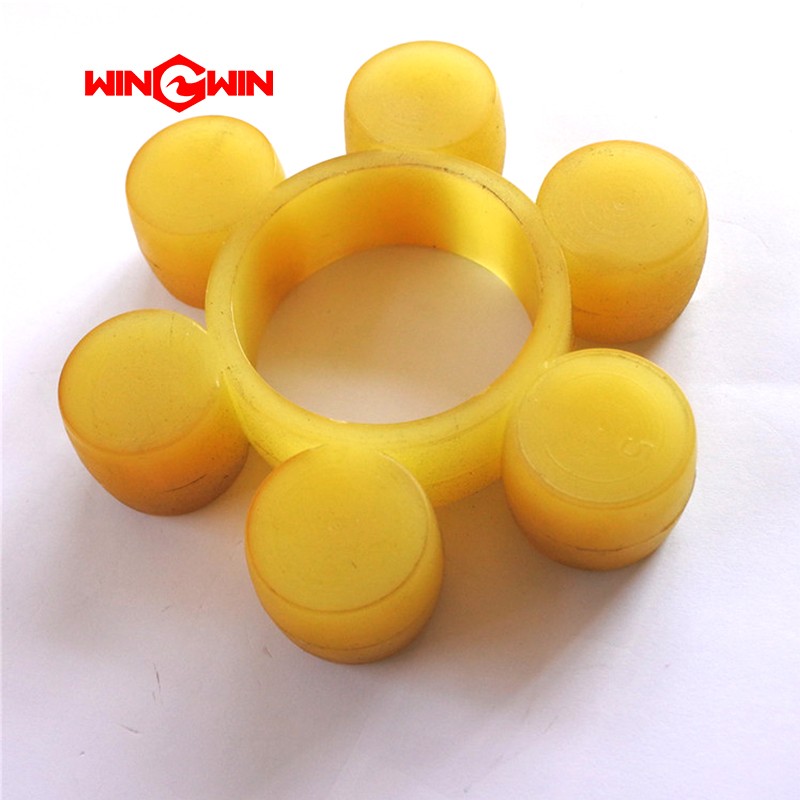
This component is a quincunx elastic coupling element, also known as a spider coupling insert, plum coupling, or jaw-type flexible coupling element . It is a star-shaped (typically 6 or 8-lobed) flexible component made from high-grade elastomers such as polyurethane (PU), natural rubber (NR), or Hytrel . In waterjet cutting systems, this component is installed between the driver and driven hubs of a shaft coupling, transmitting torque while absorbing vibrations and compensating for slight misalignment.
Applications:
Connects the electric motor to the hydraulic pump shaft in waterjet intensifier pump drive assemblies
Installed between the driver hub (motor side) and driven hub (pump side) of a jaw-type flexible coupling
Suitable for transmission systems in waterjet cutting equipment, including pump drive trains and axis motion systems
Serves as a wear component that protects the motor and pump from shock loading and misalignment
Features:
Vibration Damping: Reduces system vibration amplitude by 30%-50%, protecting the pump and motor from mechanical shock
Misalignment Compensation: Accommodates radial deviations up to 0.5mm, axial deviations up to ±1.2mm, and angular deviations up to 1°
Polyurethane Construction (Standard): Manufactured from wear-resistant polyurethane offering excellent abrasion resistance, oil resistance, and high elasticity
Color-Coded by Hardness: Different colors indicate hardness grades—typically yellow (soft/高弹性), red (medium), and blue (hard/高扭矩) for load-specific applications
Fail-Safe Design: Even if the elastic element fails, the metal jaws can interlock to continue torque transmission, preventing sudden power loss
Temperature Range: Operating temperature typically -30°C to +100°C (-22°F to +212°F), depending on material selection
Cost-Effective Replacement: Consumable component designed to wear preferentially, protecting expensive metal coupling hubs
Maintenance:
Inspection Frequency: Inspect during regular pump maintenance; recommended replacement every 2,000-5,000 operating hours depending on load conditions
Visual Inspection: Check for cracks, deformation, hardening, or permanent compression set. Replace immediately if lobes show uneven wear patterns or if cracks are visible
Aging Check: Polyurethane naturally ages over time; replace if material has lost elasticity or shows brittleness, even if no cracks are visible
Misalignment Diagnosis: Uneven or one-sided lobe wear indicates shaft misalignment—verify motor and pump alignment before installing new element
Installation: No tools required; remove the coupling guard, loosen motor mounting bolts, slide motor back, remove old element, clean hubs, install new element, and realign
Material Selection: Use manufacturer-specified hardness grade—incorrect hardness causes premature failure (soft material under heavy load extrudes; hard material under light load transmits excessive vibration)
Bolt Torque Check: During service, verify motor mount bolts and coupling set screws are torqued to manufacturer specifications to prevent misalignment recurrence
Full Depressurization: Before servicing, fully depressurize the waterjet system, disconnect electrical power, and follow lockout/tagout procedures
Lubrication Note: Some coupling designs are "dry" (no lubrication required); others may benefit from light grease application—consult equipment manual
Storage: Store spare elements in a cool, dry environment away from direct sunlight, ozone sources, and chemicals to prevent premature aging