HP-Tube-Bent-38-20498577
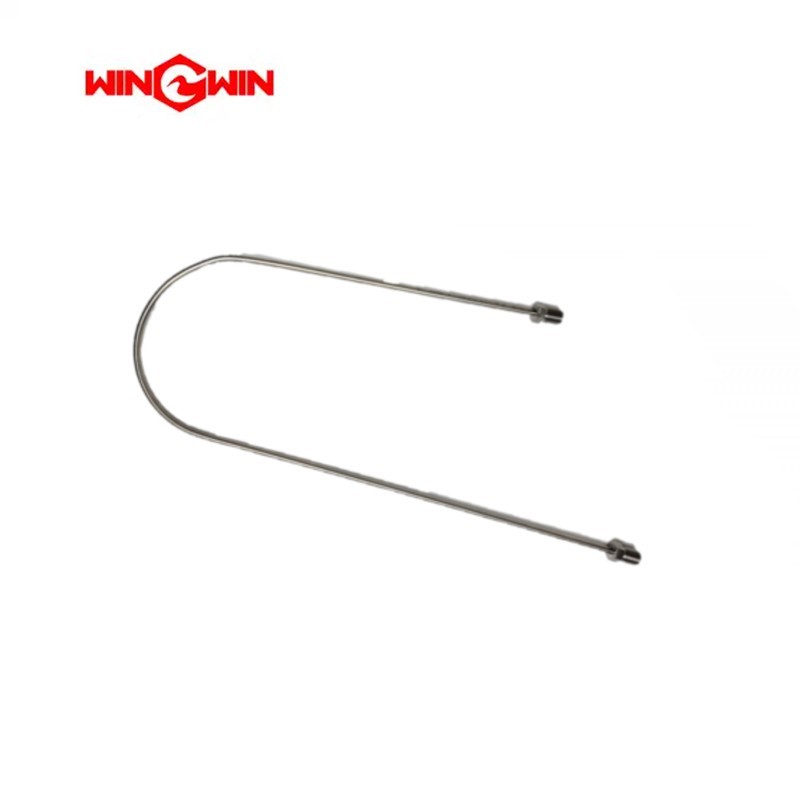
Product Name: Bent HP Tube (3/8″) – Part No. 20498577
Description:
The Bent HP Tube 20498577 is a pre‑formed, rigid high‑pressure (HP) fluid conduit specifically designed for waterjet cutting systems operating up to 60,000 PSI (approximately 4,137 bar). The “38” designation indicates a 3/8 inch (9.5 mm) outer diameter, which is the standard size for medium‑to‑high flow waterjet plumbing and is often used for main transmission lines between the intensifier pump and the cutting head.
Manufactured from corrosion‑resistant stainless steel, the tube is hydraulically formed to a precise angle (typically 90 degrees) to route high‑pressure water around machine components such as the Z‑axis slide or gantry. The ends feature precision‑machined 60‑degree cone seats that create a reliable metal‑to‑metal seal with standard high‑pressure fittings, gland nuts and coned inserts. Using a pre‑bent tube eliminates the need for field bending, which can weaken the tubing and create stress risers that lead to premature fatigue failure.
Applications:
Changing the direction of high‑pressure water flow by a specific angle (e.g. 90°) to route plumbing around the Z‑axis slide, gantry or pump manifold
Connecting the outlet of the on/off valve (water switch) to the inlet of the cutting head rotary joint
Serving as a rigid, leak‑free fluid passage in space‑constrained areas where flexible hose is not suitable
Features:
Pre‑formed Geometry: Hydraulically formed to a specific angle, eliminating the need for field bending which can weaken the tubing and create stress risers
High‑Strength Material: Manufactured from stainless steel to withstand continuous pressure cycling up to 60,000–90,000 PSI
Cone Seat Ends: Precision‑machined 60‑degree cone sealing surfaces for a reliable metal‑to‑metal seal with standard HP fittings
Corrosion‑Resistant: Resists pitting and degradation from water and abrasive dust
3/8″ Outer Diameter: Standard size for medium‑to‑high flow waterjet plumbing and main transmission lines
Maintenance:
Failure Diagnosis (When to Replace):
Visible Cracks or Deformation: Any cracking, bulging or permanent bending of the tube warrants immediate replacement
Deep Scratches or Gouges: Surface damage that penetrates the protective layer can act as a stress riser and lead to fatigue failure
Cone Seat Damage: Nicks, galling or pitting on the 60‑degree cone sealing surface will cause high‑pressure leaks
External Water Leakage: Persistent weeping from the tube connections indicates a failed cone seal, damaged threads or insufficient torque. Leaks allowed to continue at high pressure can quickly erode and damage the system
Abnormal Temperature: If a specific tube section feels warmer than others during operation, internal leakage or erosion may be occurring
Inspection & Replacement Guidelines:
Full Depressurisation (Critical): Before any maintenance, place the main electrical disconnect in the OFF position, bleed down all high‑pressure lines, and follow lockout/tagout procedures. Never service a pressurised HP line as severe injury can result
Regular Visual Inspection: Develop a routine for leak‑checking all high‑pressure fittings and tubing at the beginning of each shift. Repair any leaks as soon as they are discovered to prevent additional component damage
Leak Detection via Temperature: Leaks not visible by the naked eye can often be discovered by feeling the temperature of components. If a connection feels warmer than normal, internal leakage may be occurring
Vibration Damping: Ensure the tube is properly secured with clamps or brackets. Excessive vibration leads to fatigue failure at the bend or end fittings
Thread Care: Clean all threads and cone seats thoroughly before assembly. Use a dedicated HP tube cleaning brush
Lubrication: Apply a thin, even layer of high‑pressure anti‑seize compound to the male threads of the gland nuts only. Do not apply lubricant to the cone sealing surfaces as this can prevent the proper metal‑to‑metal seal
Two‑Wrench Method (Critical): When tightening or loosening the gland nuts, always use two correctly sized wrenches—one to counter‑hold the tube body and one to turn the nut. This prevents twisting stress on the tube and ensures the cone seat remains properly aligned
Torque Compliance: Tighten the gland nuts to the torque value specified in the equipment service manual (e.g. 50‑55 ft‑lbs for 3/8″ HP connections). Over‑tightening can damage the cone seats; under‑tightening will cause high‑pressure leaks
Do Not Attempt Repair: Do not attempt to straighten or re‑bend a pre‑formed tube; this work‑hardens the metal and creates stress risers that can lead to catastrophic failure under pressure
Clean Area Maintenance: Perform tube replacement in a designated clean area to prevent contamination of sealing surfaces with abrasive particles
Cross‑Reference Information:
Compatible with 60K‑90K waterjet intensifier systems
3/8″ OD, pre‑bent HP tube
Used with standard 3/8″ high‑pressure fittings (gland nut and cone)